When discussing thermal storage cooling technology, one common misconception is that ice thermal storage systems are only valuable in regions with peak–off-peak electricity price differences. While time-of-use pricing can indeed amplify economic benefits, it is far from being the only condition that determines whether an ice storage system is suitable.
In reality, ice storage offers multi-dimensional value—load management, space optimization, emergency cooling, and green energy integration—that makes it beneficial even in regions without significant electricity price gaps.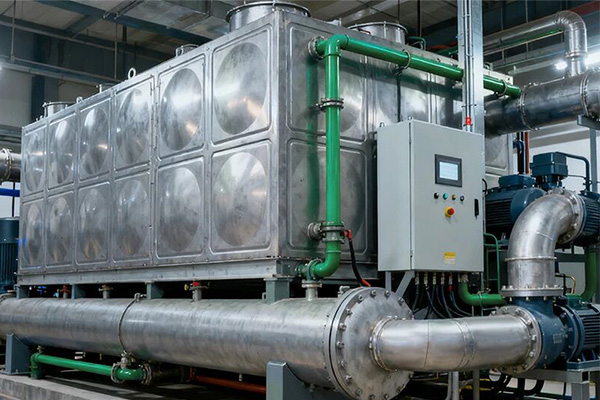
Electricity Price Differences: A Benefit, Not a Requirement
In areas with time-of-use electricity tariffs, ice storage reduces operating costs by producing ice at night and releasing cooling during daytime peaks. This cuts peak demand, lowers electricity bills, and reduces chiller operation during the most expensive hours.However, the true value of an ice storage system lies in its ability to store and shift cooling capacity, not in electricity price arbitrage alone. Even without a peak–valley price structure, its advantages remain significant.
1. Ideal for Facilities With Highly Fluctuating Cooling Loads
Facilities such as shopping malls, data centers, and hospitals often experience significant variations in cooling demand:• Malls see peak loads during daytime and low loads at night
• Hospitals require constant cooling in critical areas but lower loads elsewhere
• Data centers experience irregular spikes in heat output
Ice storage systems help smooth out these fluctuations by:
✔ Releasing cooling during peak load
✔ Reducing chiller stress
✔ Avoiding overloads and unstable outlet temperatures
✔ Producing ice during low-load periods for more efficient chiller operation
These benefits have nothing to do with electricity price differences.
2. Space-Constrained Buildings Benefit Greatly
Traditional cooling systems require large-capacity chillers to handle peak loads, taking up significant machine room space.Ice storage systems, on the other hand:
• Allow the use of smaller chillers
• Pair them with compact ice tanks
• Reduce equipment footprint
• Lower installation complexity
For crowded urban buildings or retrofitted facilities, space savings alone justify using ice storage—even without tariff incentives.
3. Essential for Emergency Cooling and Energy Security
In mission-critical environments, cooling interruptions can lead to disasters:• Data loss in data centers
• Medicine spoilage in pharmaceutical warehouses
• Defects in precision manufacturing
Ice storage tanks serve as reliable emergency cooling reserves:
✔ Supply cooling during power outages
✔ Maintain temperature when chillers fail
✔ Provide several hours of stable cooling
✔ Ensure business continuity until backup systems activate
This benefit is independent of electricity pricing.
4. Supports Renewable Energy and Low-Carbon Development
Ice storage pairs seamlessly with renewable energy:• Store cooling using surplus solar or wind energy
• Release cooling when renewable output drops
• Reduce dependence on fossil-fuel-based grid power
• Increase renewable energy utilization efficiency
• Contribute to carbon reduction goals
Under global green development initiatives, the environmental value alone makes ice storage a strategic choice.
Conclusion: Electricity Price Difference Is a Bonus, Not a Prerequisite
Electricity price differences enhance the economic returns of ice thermal storage systems, but they are not the deciding factor.The true considerations are whether the scenario has:
• Highly fluctuating cooling loads
• Limited installation space
• Strong emergency cooling needs
• Green and low-carbon objectives
As thermal storage technology continues to mature, ice storage systems will become even more versatile, extending far beyond regions influenced by electricity pricing—and becoming a key solution for optimizing cooling systems across diverse industries.
评论
发表评论