跳至主要内容

What is the truth behind the simplification of industrial chillers

 In recent years, it's been noticeable that industrial chillers have become increasingly simple. From complex operating systems to user-friendly intelligent controls and modular designs, these changes raise an intriguing question: what is the truth behind this simplification?
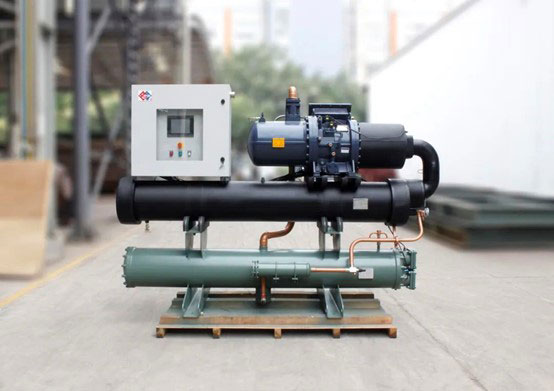
H.Starts Industrial Chillers


Key Factors Behind Simplification

1. Technological Advancements


Technological progress is a key factor in the simplification of industrial chillers. With continuous advancements in technology, new materials, processes, and techniques have been widely applied in the manufacturing of industrial chillers. These innovations have significantly improved the performance of the equipment, while also paving the way for simplification.

2. Changing Market Demands


Changes in market demands have also driven the simplification of industrial chillers. In industrial production, there is a growing emphasis on efficiency and cost reduction. To meet these market demands, manufacturers of industrial chillers have focused on improving the energy efficiency ratio and lowering manufacturing costs. Simplifying the equipment structure, reducing the number of components, and decreasing maintenance difficulty are effective measures to achieve these goals.

3. Enhanced Environmental Awareness


The increase in environmental awareness has positively influenced the simplification of industrial chillers. As global environmental consciousness grows, governments worldwide have introduced regulations and policies to limit the production and use of high-pollution, high-energy-consuming products. This has forced manufacturers of industrial chillers to seek more environmentally friendly and efficient solutions. Simplifying equipment design and optimizing operating parameters are crucial steps in achieving these objectives.

Conclusion

The trend of industrial chillers becoming simpler reflects not only the continuous advancements in technology but also the changing market demands and heightened environmental awareness. These factors collectively drive the development of industrial chillers, making them more aligned with the needs of modern industrial production.

About H.Stars Group:

H.Stars Group,30 years Hongkong brand factory ,manufactures a wide range of HVAC equipment: air-cooled chillers, water-cooled chillers, high-temperature heat pumps, AHU, and shell and tube heat exchangers supplying to worldwide 53+ countries. With H.Stars Hongkong brand recognition and 8 subsidiaries industrial chain, H.Stars Group has supplied HVAC products to 500 Fortune companies.
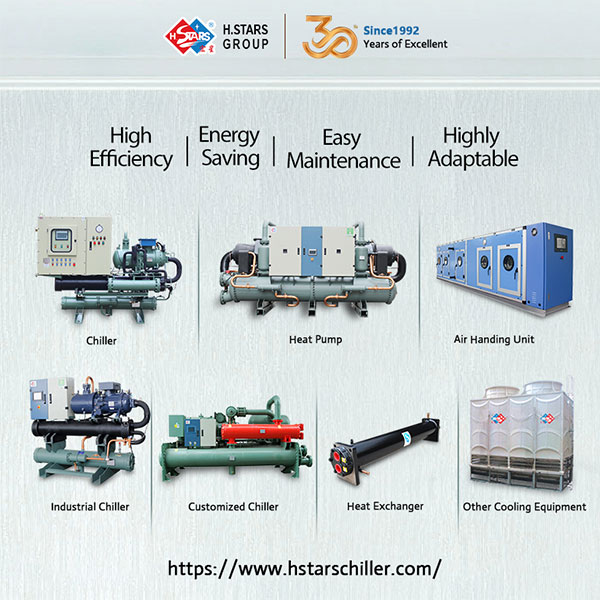

HVAC equipment


评论

此博客中的热门博文

How to design a water chiller system with AHU for pharmaceutical factory workshop | Hstarschiller.com

  Nowadays, it’s become more and more aware of pharmaceutical enterprises to realize the significance of building an efficient and green to environment cooling system in the factory, because it can not only help the owner to save the running cost but also contribute to the society by reducing the emissions, especially for those developed countries . But how to design a simple but energy saving cooling system with clean workshop? Below we are going to give you a real case for your reference to help you understand well, especially for those are quite new to the water chiller system field. Firstly,this project has been done by  H.Stars Group  ,including the system design,equipment manufacturing and installation etc. Below is the detailed project overview to help you understand the owner’s requirement . Project address: one of the pharmaceutical factories located in China Project desire: Requesting a constant temperature with humidity for oral solid preparation workshop Proje...

Where are water-cooled chillers used? What is a chiller used for?

  Water-cooled chiller   is a cooling water device that can provide constant temperature, constant current and constant pressure. A chiller is a machine that achieves refrigeration through vapor compression or absorption cycles. These liquids can flow through heat exchangers to cool the air or equipment. The industrial chiller can always output ice water with a lower temperature than the ambient temperature. It can be used wherever cooling is required, either direct cooling or indirect heat exchange. The main components of a water-cooled chiller are compressor, condenser, evaporator, water pump, and water tank. Chillers have a wide range of applications. The chiller can be used to cool the injection mold, improve the quality of plastic products, cool the vacuum coating, control the temperature of the vacuum coating machine, cool the food industry, fast cooling processing, chemical industry, effectively control the temperature of chemicals, cooling buildings, concrete fast Cool...

Hotels Go Green: Heat Recovery Chillers Cut Costs and Carbon Footprints

  In the operation of hotels, energy costs are a significant factor that cannot be overlooked. The advent of   heat recovery chillers   offers an efficient and energy-saving solution for hotels. ​ A heat recovery chiller, in simple terms, not only performs cooling tasks but also effectively recovers heat. For hotels, this is a highly practical feature. Traditional chillers only accomplish cooling, wasting the heat generated. However, heat recovery chillers are different; they can convert the otherwise wasted heat into usable hot water. In principle, during the cooling cycle of a chiller, the refrigerant releases heat. Heat recovery chillers use special devices to collect this heat, and through a series of heat exchange processes, they can produce hot water. This hot water can be used in various scenarios within the hotel. For example, it can supply water for guest rooms' washing and brushing, provide hot water for the hotel's restaurant kitchen, and even be used for heati...