跳至主要内容

Oumalchiller.com - What is screw chiller?

 A screw chiller, also known as a screw compressor chiller, is a type of water chiller utilized for cooling applications in various industries, including injection molding. The semi-hermetic screw compressor is the core components of a screw chiller.  It operates based on the principle of a rotary screw compressor, which is a positive displacement compressor. The screw compressor consists of two interlocking helical rotors that compress the refrigerant gas to raise its pressure and temperature.


According to different heat dissipation methods, screw chillers are divided into air-cooled screw chillers and water-cooled screw chillers. Under the same cooling capacity requirement, the purchase cost of water-cooled screw chillers is lower than that of air-cooled screw chillers. As far as chiller installation is concerned, air-cooled screw chillers are easier to install.
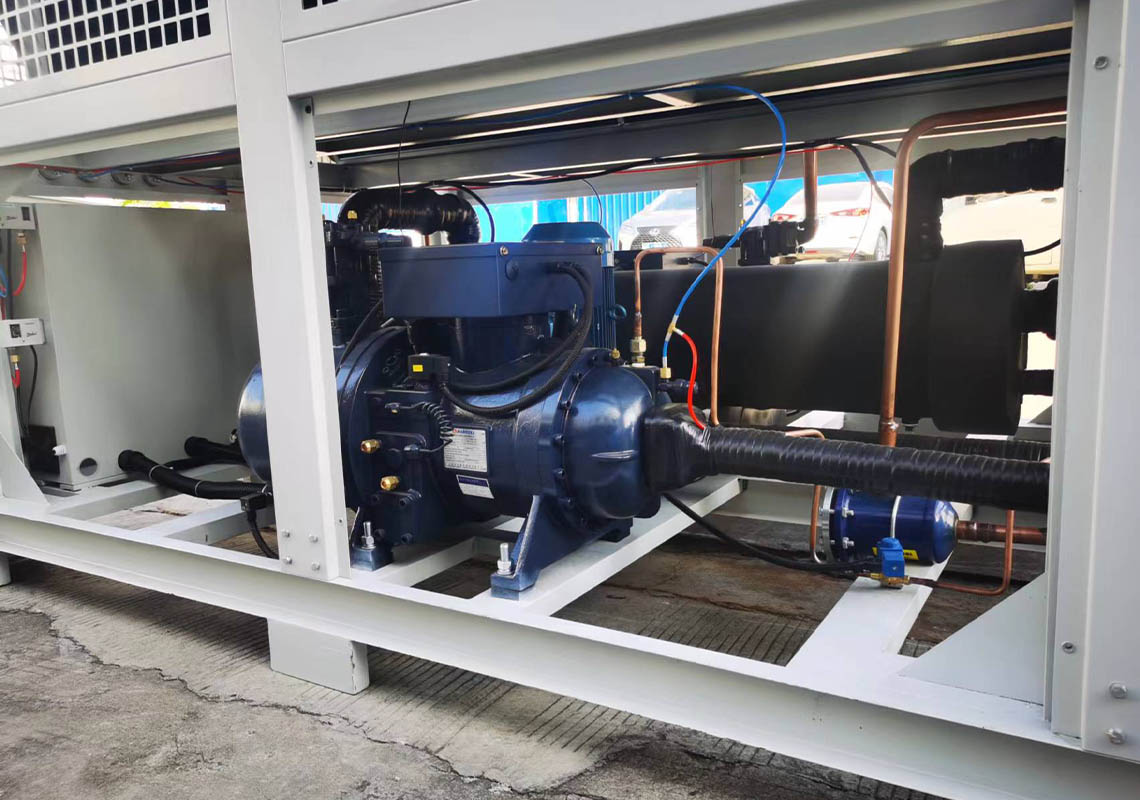
air cooled screw chiller

Here are some key features of a screw chiller:


Cooling capacity: Screw chillers are available in a wide range of cooling capacities to meet the specific requirements of injection molding machines. They can handle high cooling loads efficiently, making them suitable for industrial applications. Oumal screw water chiller cooling capacity from 100kw to 1000kw.

Air cooled screw chiller cooling capacity from 90kw to 600KW.


Energy efficiency: Screw chillers are known for their energy efficiency. They can achieve high cooling capacities while consuming relatively less electrical power compared to other types of chillers.


Temperature control: Screw chillers offer precise temperature control, allowing for stable and consistent cooling of the process water used in injection molding machines. This helps maintain the desired temperature for optimal molding conditions. Oumal screw chillers use Siemens PLC controller. Intelligent control, simple operation.


Reliability and durability: Screw chillers are robust and designed for continuous operation in demanding industrial environments. They are built with durable components and feature advanced control systems to ensure reliable and trouble-free performance.


Modular design: Many screw chillers have a modular design, which allows for easy scalability and flexibility. This means that multiple units can be combined to provide higher cooling capacity if needed, making them suitable for expanding operations or varying cooling requirements.


Advanced control options: Screw chillers often come with advanced control options, such as microprocessor-based controllers or touch screen interfaces. These controls provide intuitive operation, real-time monitoring, and the ability to set and adjust various parameters for optimal performance and energy savings.


Noise reduction: Screw chillers are designed with noise reduction features to minimize the operating noise levels. This is important in industrial settings where noise can be a concern.
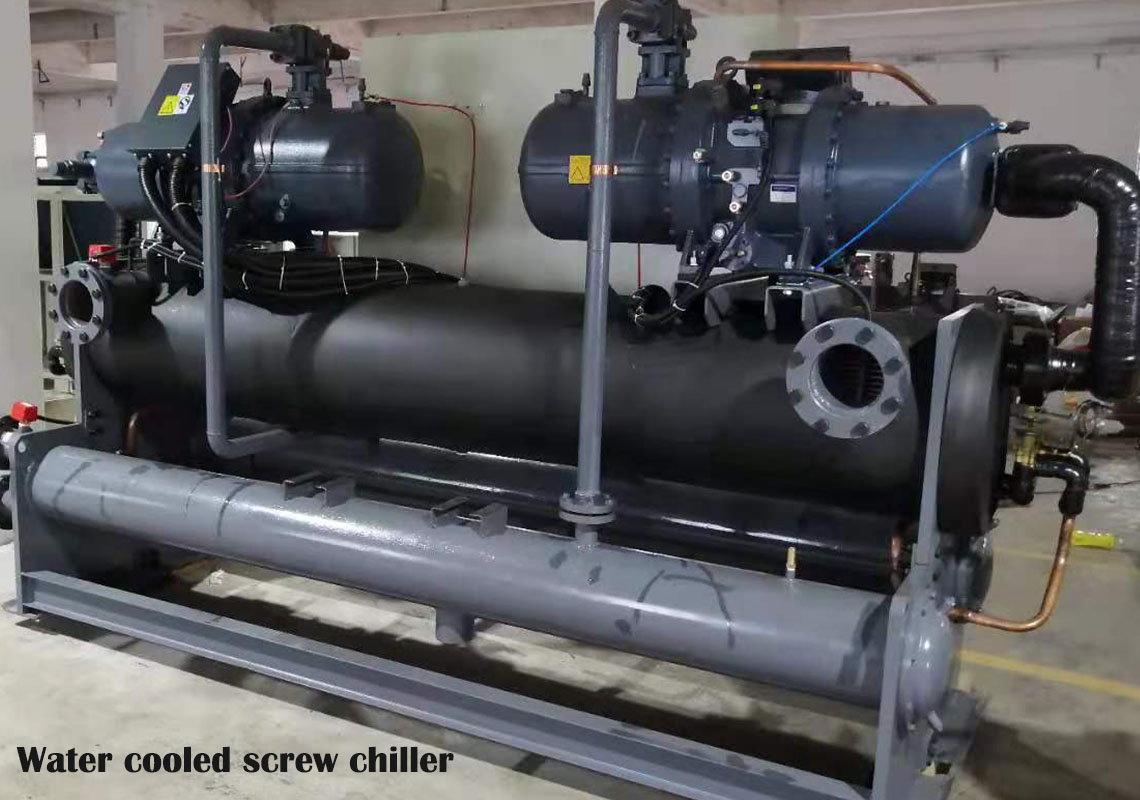
water cooled screw chiller


Overall, screw chillers offer efficient and reliable cooling solutions for injection molding machines, helping to maintain consistent process temperatures and optimize the production of high-quality plastic parts.

评论

此博客中的热门博文

Avoid Downtime, Cut Costs: Smart Maintenance for Smarter Chillers

  Screw water-cooled chillers   typically operate around 3,000 hours per year, depending on China's climate and geographical conditions. Regular and scientific maintenance is crucial to ensure long-term, reliable operation, extend the lifespan, and reduce operating costs. Maintenance and Upkeep Preventive maintenance during operation and inspection involves creating annual and monthly maintenance plans based on actual operating conditions. Shutdown Procedures In winter, clean and dry the unit. Open the drain valve to empty the  shell-and-tube heat exchanger  to avoid freezing. The shutdown sequence is: chiller off - cooling tower fan off - cooling water pump off - chilled water pump off. Special attention to anti-freezing: 1. Drain the evaporator and condenser if the unit is outdoors below 0°C during standby. 2. Interlock the water flow switch with the unit to prevent freezing when the chilled water flow switch malfunctions. 3. Ensure water in the evaporator is flowi...

What are the differences between air-cooled chillers and water-cooled chillers | Oumalchiller.com

  We all know that according to different heat dissipation methods, chillers can be divided into air-cooled chillers and water-cooled chillers. What is the difference between air-cooled chillers and water-cooled chillers? ​ 1. The  air-cooled chiller  uses copper tubes and aluminum fins to dissipate heat from the condenser. A fan is required to blow the outdoor air through the heat exchange fins and take away the heat of the condenser, so the air-cooled chiller does not need to be connected to the cooling tower. But compared with water-cooled chillers, under the same power, air-cooled chillers have larger equipment size and higher noise. The condenser of water-cooled chillers exchanges heat with the cooling water from the cooling tower through the heat exchanger. The excess waste heat will be transported to the cooling tower through the cooling water loop and released into the atmosphere, or enter the water-water heat exchanger or soil heat exchange coil for storage. Ther...

What is difference between centrifugal chiller and screw chillers?

 Water Chillers are generally divided into the following categories: screw chillers, centrifugal chillers, water ring heat pump units, plate and tube evaporative condensing screw chillers, thermal storage air conditioners, etc. Screw chiller and centrifugal chiller are equipment that we often encounter. Below,  Oumal Refrigeration  will take you to understand the difference between centrifugal chiller and screw chiller? What is a  screw chiller ? The compressor adopts a screw type, hence the name screw chiller. The refrigerant coming out of the evaporator of the unit is a gas; after adiabatic compression by the compressor, it becomes a high-temperature and high-pressure state. The compressed gas refrigerant is isobarically cooled and condensed in the condenser. After condensation, it changes into liquid refrigerant, and then expands to low pressure through the throttle valve and becomes a gas-liquid mixture. The liquid refrigerant under low temperature and low pressu...