跳至主要内容

How Does H.Stars Group Produce A High Quality Water Cooled Chiller

 Since H.Stars Group has been established for more than 28 years so far, some of you might wonder how H.Stars produces a high quality water cooled chiller. Below is the detailed production process with strict quality control system and 100% testing before delivery.


1. Chiller Frame welding: clean the bracket and select the appropriate welding method according to the specifications of the welding materials and the technical requirements.
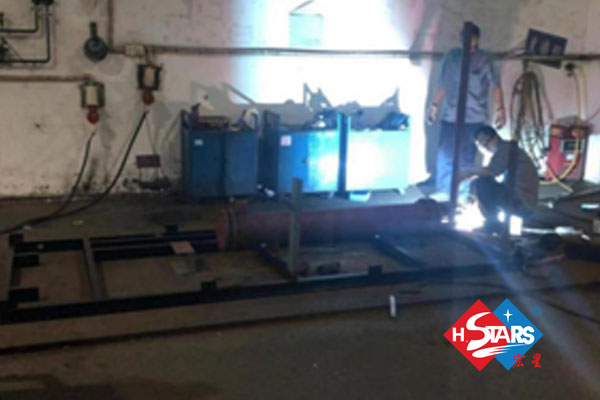

process chiller


2. Chiller Bracket assembly: compressor, electric box, filter and other brackets are assembled and welded according to the required sizes from the drawing.
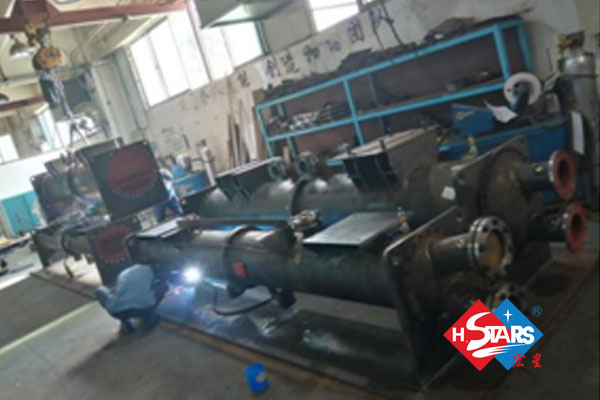

Chilled Water


3.Shell and tube evaporator and condenser assembling process: the evaporator and condenser ,self-manufactured by UAR ,the subsidiary of H.Stars Group, is in welding process according to buyer’s requirements and H.Stars  R&D team design.
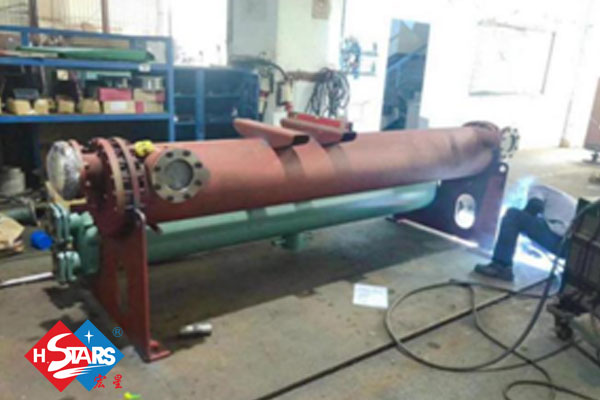

water-cooled chillers


4.Sheet metal: the electric control box shell on the H.Stars chiller is designed and manufactured independently, and the quality is under the control of the factory.
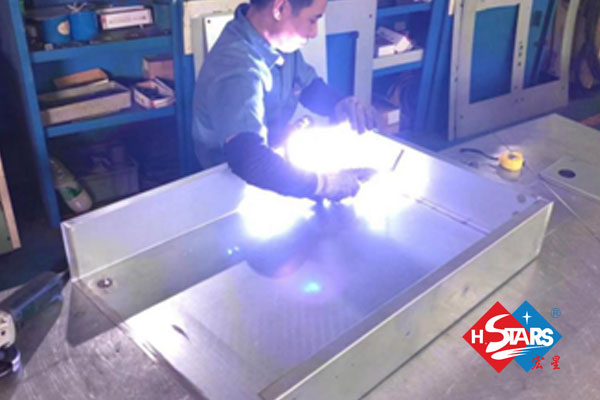

Sheet metal


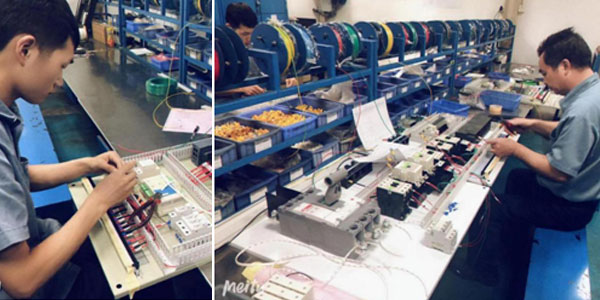
5.Layout of electrical components
According to the electrical schematic diagram, the layout of the electrical components and the wire slot is reasonably discharged on the electrical base plate, and the hole position of the corresponding component and the installation hole position of the wire slot are marked with a pencil and drilled. The layout requires that the components should not be hindered by space during operation, and there should be no possibility of touching the charged body.


6.Electric control box and compressor wiring: The controller imports the latest version of the program according to the factory operation standards before installation, and sets and adjusts the corresponding parameters according to the model parameter comparison table and customer requirements.
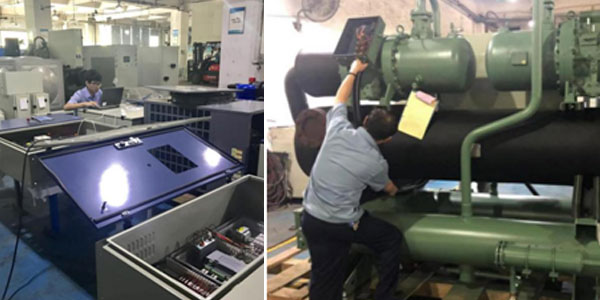

Layout of electrical components


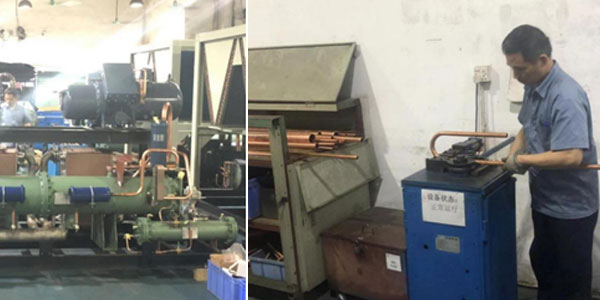
7.Refrigerant pipeline connection: For the vibration mode of the compressor, use a suitable shaped pipe to avoid resonance points near the power frequency; you can avoid resonance by adding weight.
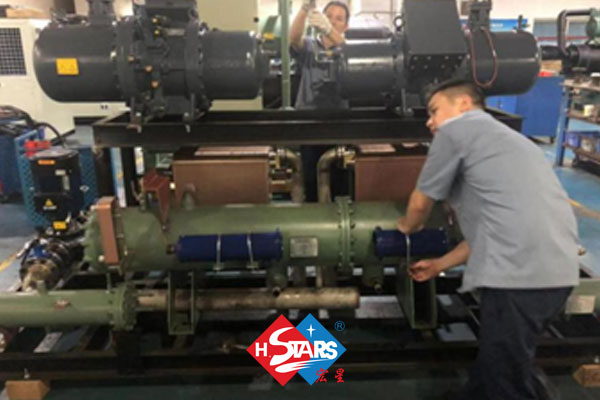
Refrigerant pipeline

suitable shaped pipe


8. Equipment testing station
National standard testing station, the factory equipment must be tested, and only after passing the test can the goods be delivered to ensure reliable product quality.
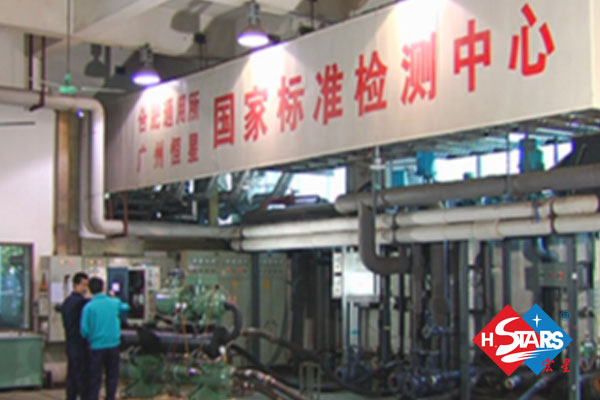

Equipment testing station


9.Large equipment testing center
H.Stars is capable of testing 800RT ~ 3000RT equipment, mainly detect centrifuge chiller and large chiller unit.
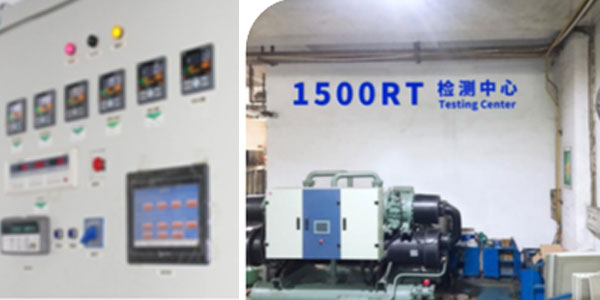

Large equipment testing center


10.Insulation wrapping
According to the requirements of order, the thermal insulation will be wrapped accordingly. The chiller pump and related waterway system parts will be wrapped with thermal insulation after the unit passed the quality testing.
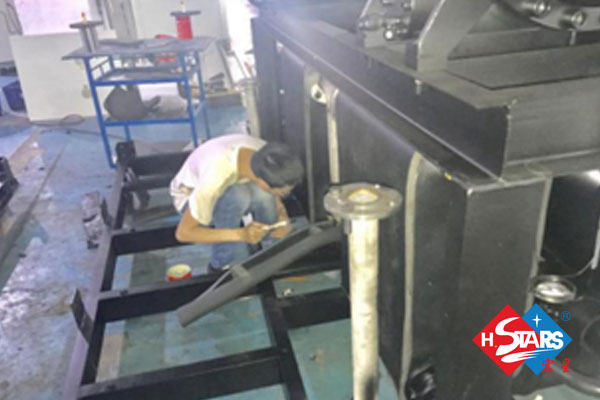

Insulation wrapping


11.Outside spray

The main components the chiller except compressor, must be evaporator and condenser. According to customer requirements, the heat exchangers will be painted with required colors; After the heat exchanger is rust removed and gets polished ,it will be painted twice on the surface to secure the painting quality.
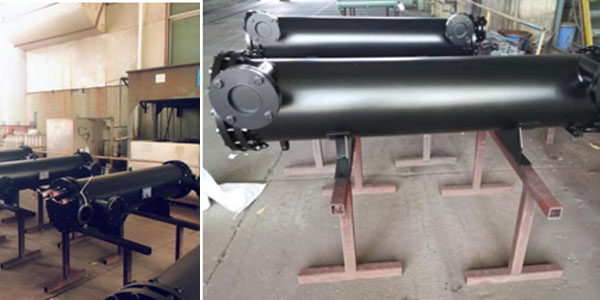

Outside spray


12. Packing Type
H.Stars is available to provide different packages according to exporting packing standard ,such as fumigated wooden cases and plywood boxes or reinforced shrink-wrap covering with industrial grade.
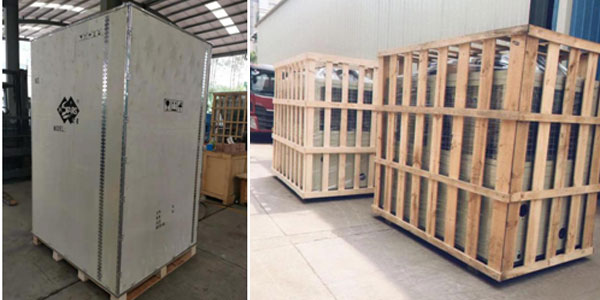

Chiller Packing


For more details welcome to contact us sales@hstars.com.cn

评论

此博客中的热门博文

Avoid Downtime, Cut Costs: Smart Maintenance for Smarter Chillers

  Screw water-cooled chillers   typically operate around 3,000 hours per year, depending on China's climate and geographical conditions. Regular and scientific maintenance is crucial to ensure long-term, reliable operation, extend the lifespan, and reduce operating costs. Maintenance and Upkeep Preventive maintenance during operation and inspection involves creating annual and monthly maintenance plans based on actual operating conditions. Shutdown Procedures In winter, clean and dry the unit. Open the drain valve to empty the  shell-and-tube heat exchanger  to avoid freezing. The shutdown sequence is: chiller off - cooling tower fan off - cooling water pump off - chilled water pump off. Special attention to anti-freezing: 1. Drain the evaporator and condenser if the unit is outdoors below 0°C during standby. 2. Interlock the water flow switch with the unit to prevent freezing when the chilled water flow switch malfunctions. 3. Ensure water in the evaporator is flowi...

What Are the Key Requirements for Flooded-Type Heat Exchangers in Air Suspension Chillers

  Air suspension chillers   are crucial in many industrial and commercial applications, and the flooded-type heat exchanger is one of the most important components of these systems. Understanding the requirements of the heat exchanger is essential to ensuring the air suspension units operate efficiently and remain stable. A flooded-type heat exchanger works by transferring heat between two fluids with different temperatures. In air suspension chillers, it helps regulate temperature, optimize energy use, and improve overall performance. For instance, it can transfer heat from high-temperature gases to low-temperature liquids, or vice versa. 1. Material Requirements 1.1 Corrosion Resistance In many industrial environments, fluids can be corrosive. For example, they may come into contact with acidic or alkaline substances. To withstand these conditions, the heat exchanger’s tubes and casing need to be made from corrosion-resistant materials, such as stainless steel. Stainless ste...

Hotels Go Green: Heat Recovery Chillers Cut Costs and Carbon Footprints

  In the operation of hotels, energy costs are a significant factor that cannot be overlooked. The advent of   heat recovery chillers   offers an efficient and energy-saving solution for hotels. ​ A heat recovery chiller, in simple terms, not only performs cooling tasks but also effectively recovers heat. For hotels, this is a highly practical feature. Traditional chillers only accomplish cooling, wasting the heat generated. However, heat recovery chillers are different; they can convert the otherwise wasted heat into usable hot water. In principle, during the cooling cycle of a chiller, the refrigerant releases heat. Heat recovery chillers use special devices to collect this heat, and through a series of heat exchange processes, they can produce hot water. This hot water can be used in various scenarios within the hotel. For example, it can supply water for guest rooms' washing and brushing, provide hot water for the hotel's restaurant kitchen, and even be used for heati...