跳至主要内容

How to find the right Explosion-proof chillers for industrial process cooling


Introduction of explosion-proof chiller:

International Industries have demanded a lot from their HVAC machines. Some of equipment might be susceptible to explosions inside and outside their circuitry. Getting an explosion-proof chiller is essential for many industrial environments. However ,very few factory can manufacture explosion-proof chillers with mature technology and skilled engineers.
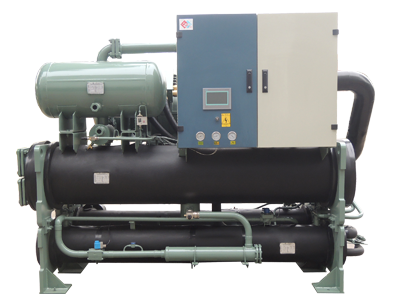


H.Stars Group is one of the very few companies that can build explosion-proof machines. H.Stars team of engineers from R&D to quality inspection ensures that all explosion-proof chillers will definitely meet the standards of reliable equipment. H.Stars technicians and specialists have possessed 27 years of experience in designing machines. It is mainly used in special places such as inflammable and explosive, and the production power ranges from 10HP-200HP. Can be customized according to customer requirements. The components of the chiller are manufactured in accordance with national explosion-proof standards. Explosion-proof air conditioning equipment is also appropriate for coastal and off/coastal applications like naval operations and off-shore oil rigs.

What are the selection principles for explosion-proof chillers?

The explosion-proof chiller is a kind of chiller, which is very special and often used in explosive places. In some of the current processes, it is necessary to use an explosion-proof chiller, then anyone knows the selection principle of the explosion-proof chiller?

H.Stars will introduce the selection principle to everyone.

1. We need to choose from the aspects of safety performance;

2, also need to choose from the use of the environment;

3, With characteristics of the explosion-proof chiller.

The main features of the H.Stars explosion-proof chiller:

1. H.Stars explosion-proof chiller equipment adopts new semi-closed twin-screw compressor or a fully enclosed scroll compressor, which is energy-saving, efficient and stable. It has fewer moving parts, stable, high efficiency and low failure rate.

2, The main components of H.Stars explosion-proof industrial Chiller are Danfoss, Emerson, and other internationally renowned brand components, using Siemens industrial PLC programmable controller, large screen LCD interface; automatic / manual switching, high degree of automation ;

3. The explosion-proof chiller provides comprehensive protection from the refrigerant system, electronic control system and water treatment system to fully guarantee the safe and normal operation of the unit. The compressor sets the motor overheating, overcurrent, abnormal phase sequence, low oil level, low pressure, high pressure, etc.; it is characterized by high efficiency, energy saving, stability and safety;

4, H.Stars explosion-proof chiller’s models are flexible and can be customized according to customer requirements;

For more information on H.Stars explosion-proof chiller manufacturers and our refrigeration products, please contact us!

评论

此博客中的热门博文

Avoid Downtime, Cut Costs: Smart Maintenance for Smarter Chillers

  Screw water-cooled chillers   typically operate around 3,000 hours per year, depending on China's climate and geographical conditions. Regular and scientific maintenance is crucial to ensure long-term, reliable operation, extend the lifespan, and reduce operating costs. Maintenance and Upkeep Preventive maintenance during operation and inspection involves creating annual and monthly maintenance plans based on actual operating conditions. Shutdown Procedures In winter, clean and dry the unit. Open the drain valve to empty the  shell-and-tube heat exchanger  to avoid freezing. The shutdown sequence is: chiller off - cooling tower fan off - cooling water pump off - chilled water pump off. Special attention to anti-freezing: 1. Drain the evaporator and condenser if the unit is outdoors below 0°C during standby. 2. Interlock the water flow switch with the unit to prevent freezing when the chilled water flow switch malfunctions. 3. Ensure water in the evaporator is flowi...

How to design a water chiller system with AHU for pharmaceutical factory workshop | Hstarschiller.com

  Nowadays, it’s become more and more aware of pharmaceutical enterprises to realize the significance of building an efficient and green to environment cooling system in the factory, because it can not only help the owner to save the running cost but also contribute to the society by reducing the emissions, especially for those developed countries . But how to design a simple but energy saving cooling system with clean workshop? Below we are going to give you a real case for your reference to help you understand well, especially for those are quite new to the water chiller system field. Firstly,this project has been done by  H.Stars Group  ,including the system design,equipment manufacturing and installation etc. Below is the detailed project overview to help you understand the owner’s requirement . Project address: one of the pharmaceutical factories located in China Project desire: Requesting a constant temperature with humidity for oral solid preparation workshop Proje...

What Makes High-Temperature Heat Pump Units Essential for Modern Energy Use

  High-temperature heat pump units   have become essential to modern energy utilization technologies, finding widespread applications across various industries such as industrial, agricultural, and commercial sectors. These units' unique performance and advantages are key in driving energy transitions and achieving energy conservation and emission reductions. This blog will explore the working principles, application areas, technical features, and future trends of high-temperature heat pump units. How Do High-Temperature Heat Pump Units Work? High-temperature heat pump units operate based on the principle of the reverse Carnot cycle. They use a small amount of electrical or thermal energy to absorb heat from a low-temperature source and transfer it to a high-temperature source. The process involves four key stages: evaporation, compression, condensation, and expansion. During evaporation, the refrigerant absorbs heat from the low-temperature source and turns into a low-pressur...