跳至主要内容

What Happens When Low-Temperature Chillers Meet Pump Skids

 In the world of industrial equipment, pairing low-temperature chillers with pump skid units has become a recommendation many companies swear by. At H.Stars, we highly recommend this combination for several strategic reasons, which reflect our expertise and forward-thinking approach to industrial operations.
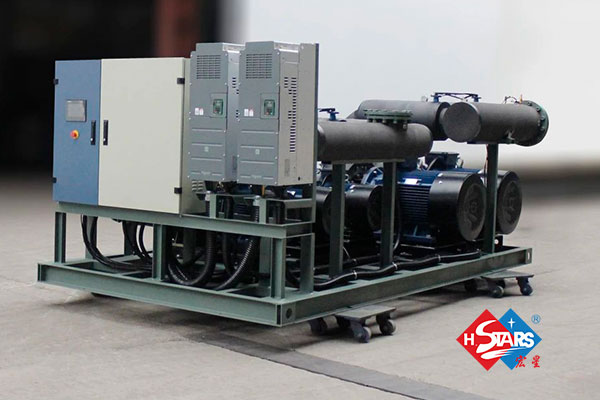

Hstars Low-temperature chillers


The Benefits of Using Pump Skid Units with Low-Temperature Chillers

When it comes to industrial cooling systems, maintaining a stable and efficient water circulation system is critical for ensuring the consistent output of the chiller. Pump skid units, thanks to their integrated design, provide a highly effective solution to this challenge. Here’s why they make a perfect match for low-temperature chillers:

1. Optimized System Efficiency

Pump skid units play a crucial role in stabilizing water flow parameters—speed, pressure, and volume—ensuring the chiller operates at peak efficiency. By maintaining steady water circulation, they prevent fluctuations in cooling performance, leading to higher energy efficiency and smoother operation.

2. Streamlined Maintenance

Unlike traditional decentralized pump systems, the skid design integrates all components into one compact unit. This centralized structure allows for easier management and quicker troubleshooting. If a malfunction occurs, maintenance technicians can quickly identify and address the issue, minimizing downtime and reducing repair costs.

3. Enhanced Reliability

Pump skid units undergo rigorous testing and optimization, ensuring they perform reliably even in challenging industrial environments. When paired with low-temperature chillers, they help guarantee the overall reliability of the entire cooling system, contributing to a more stable production process.

Why H.Stars Recommends Pump Skid Units for Low-Temperature Chillers
By integrating pump skid units into your low-temperature chiller setup, companies can experience not only enhanced efficiency but also simplified maintenance and increased system reliability. This combination ensures optimal performance, making it a highly valuable recommendation for industrial applications.


评论

此博客中的热门博文

Avoid Downtime, Cut Costs: Smart Maintenance for Smarter Chillers

  Screw water-cooled chillers   typically operate around 3,000 hours per year, depending on China's climate and geographical conditions. Regular and scientific maintenance is crucial to ensure long-term, reliable operation, extend the lifespan, and reduce operating costs. Maintenance and Upkeep Preventive maintenance during operation and inspection involves creating annual and monthly maintenance plans based on actual operating conditions. Shutdown Procedures In winter, clean and dry the unit. Open the drain valve to empty the  shell-and-tube heat exchanger  to avoid freezing. The shutdown sequence is: chiller off - cooling tower fan off - cooling water pump off - chilled water pump off. Special attention to anti-freezing: 1. Drain the evaporator and condenser if the unit is outdoors below 0°C during standby. 2. Interlock the water flow switch with the unit to prevent freezing when the chilled water flow switch malfunctions. 3. Ensure water in the evaporator is flowi...

How to design a water chiller system with AHU for pharmaceutical factory workshop | Hstarschiller.com

  Nowadays, it’s become more and more aware of pharmaceutical enterprises to realize the significance of building an efficient and green to environment cooling system in the factory, because it can not only help the owner to save the running cost but also contribute to the society by reducing the emissions, especially for those developed countries . But how to design a simple but energy saving cooling system with clean workshop? Below we are going to give you a real case for your reference to help you understand well, especially for those are quite new to the water chiller system field. Firstly,this project has been done by  H.Stars Group  ,including the system design,equipment manufacturing and installation etc. Below is the detailed project overview to help you understand the owner’s requirement . Project address: one of the pharmaceutical factories located in China Project desire: Requesting a constant temperature with humidity for oral solid preparation workshop Proje...

What Are the Key Requirements for Flooded-Type Heat Exchangers in Air Suspension Chillers

  Air suspension chillers   are crucial in many industrial and commercial applications, and the flooded-type heat exchanger is one of the most important components of these systems. Understanding the requirements of the heat exchanger is essential to ensuring the air suspension units operate efficiently and remain stable. A flooded-type heat exchanger works by transferring heat between two fluids with different temperatures. In air suspension chillers, it helps regulate temperature, optimize energy use, and improve overall performance. For instance, it can transfer heat from high-temperature gases to low-temperature liquids, or vice versa. 1. Material Requirements 1.1 Corrosion Resistance In many industrial environments, fluids can be corrosive. For example, they may come into contact with acidic or alkaline substances. To withstand these conditions, the heat exchanger’s tubes and casing need to be made from corrosion-resistant materials, such as stainless steel. Stainless ste...