跳至主要内容

H.Stars Group developed a series of new refrigerant equipment with low GWP for carbon reduction and energy saving in 2021

 According to the news on December 23, Chemours announced that from January 1, 2020, they will stop supplying high-GWP R404A and R507A refrigerants to the European Union.


At the time of this announcement, Europe is preparing to implement a ban on high-GWP refrigerants in accordance with the European F-gas regulations (517/2014) implemented on January 1.


According to the European F-gas phase-out schedule, HFC refrigerants with a GWP value higher than 2500 will be prohibited from being used for maintenance or recharging of refrigeration or refrigeration systems with a charge of 40 tons or more of carbon dioxide equivalent. This is equivalent to about 10.2kg of R404A, which is a commonly used refrigerant in medium-sized systems. Small sealing systems are not affected by the ban, but most manufacturers of such systems have switched to lower GWP refrigerants.

In addition to the commonly used R404A, the ban will also include R507A and R22 instead of gas R422D, both of which have a GWP value of more than 2500.

lowest gwp refrigerant chiller

This ban applies to all of Europe. Companies that have stored these refrigerants before that date will still be able to use the recovered or recycled refrigerants before 2030.

As one of Chemours' main competitors, Honeywell ended R404A sales in 2018.

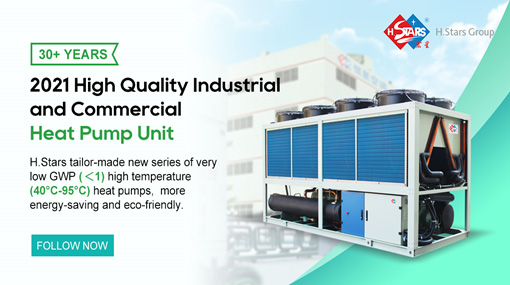
H.Stars (Guangzhou) Refrigerating Equipment Group Ltd. has specially developed a series of new refrigerant equipment with low GWP value for carbon reduction and energy saving in 2021.


H.Stars Group has focused on the R&D and production of refrigeration and heating equipment for nearly 30 years, professionally addressing customers' demands and tailoring products to customers' needs. Welcome to contact us at sales@hstars.com.cn


评论

此博客中的热门博文

Avoid Downtime, Cut Costs: Smart Maintenance for Smarter Chillers

  Screw water-cooled chillers   typically operate around 3,000 hours per year, depending on China's climate and geographical conditions. Regular and scientific maintenance is crucial to ensure long-term, reliable operation, extend the lifespan, and reduce operating costs. Maintenance and Upkeep Preventive maintenance during operation and inspection involves creating annual and monthly maintenance plans based on actual operating conditions. Shutdown Procedures In winter, clean and dry the unit. Open the drain valve to empty the  shell-and-tube heat exchanger  to avoid freezing. The shutdown sequence is: chiller off - cooling tower fan off - cooling water pump off - chilled water pump off. Special attention to anti-freezing: 1. Drain the evaporator and condenser if the unit is outdoors below 0°C during standby. 2. Interlock the water flow switch with the unit to prevent freezing when the chilled water flow switch malfunctions. 3. Ensure water in the evaporator is flowi...

Hotels Go Green: Heat Recovery Chillers Cut Costs and Carbon Footprints

  In the operation of hotels, energy costs are a significant factor that cannot be overlooked. The advent of   heat recovery chillers   offers an efficient and energy-saving solution for hotels. ​ A heat recovery chiller, in simple terms, not only performs cooling tasks but also effectively recovers heat. For hotels, this is a highly practical feature. Traditional chillers only accomplish cooling, wasting the heat generated. However, heat recovery chillers are different; they can convert the otherwise wasted heat into usable hot water. In principle, during the cooling cycle of a chiller, the refrigerant releases heat. Heat recovery chillers use special devices to collect this heat, and through a series of heat exchange processes, they can produce hot water. This hot water can be used in various scenarios within the hotel. For example, it can supply water for guest rooms' washing and brushing, provide hot water for the hotel's restaurant kitchen, and even be used for heati...

What Are the Key Requirements for Flooded-Type Heat Exchangers in Air Suspension Chillers

  Air suspension chillers   are crucial in many industrial and commercial applications, and the flooded-type heat exchanger is one of the most important components of these systems. Understanding the requirements of the heat exchanger is essential to ensuring the air suspension units operate efficiently and remain stable. A flooded-type heat exchanger works by transferring heat between two fluids with different temperatures. In air suspension chillers, it helps regulate temperature, optimize energy use, and improve overall performance. For instance, it can transfer heat from high-temperature gases to low-temperature liquids, or vice versa. 1. Material Requirements 1.1 Corrosion Resistance In many industrial environments, fluids can be corrosive. For example, they may come into contact with acidic or alkaline substances. To withstand these conditions, the heat exchanger’s tubes and casing need to be made from corrosion-resistant materials, such as stainless steel. Stainless ste...