跳至主要内容

Attention: Brine concentration will cause serious consequences to brine chiller

 Low-temperature brine chiller is also one of the more commonly used refrigeration equipment. Its refrigerant is the so-called brine solution, which has a low freezing point. It is especially suitable for medium and low temperature chillers to carry cold capacity. The temperature is generally required to be controlled below 0 ℃, which is usually used for the low temperature demand of some special production lines in industry. So, what kind of harm will be caused to the Brine chiller if the ratio of Brine refrigerant is not correct?
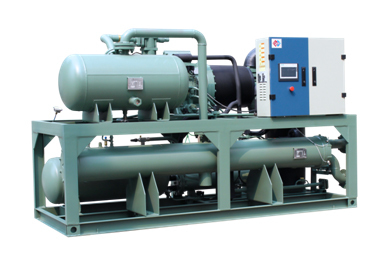
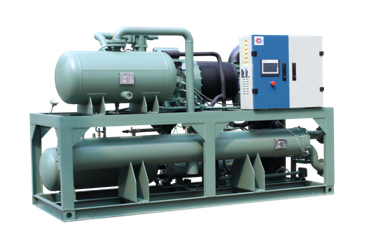
low-temperature brine chiller

Brine chiller system

The refrigerant is used to transfer the cold and heat generated by the refrigerator to the intermediate substance of the object to be cooled or heated. The common refrigerants are air, water, brine, organic compounds and their aqueous solutions; When the outlet water temperature is 0 ℃, the commonly used water-borne refrigerant will freeze. At this time, it is necessary to select appropriate refrigerant, such as brine, glycol, etc. the selection principle is that the refrigerant in the heat exchanger will not freeze.
5. What kind of harm will be caused to the Ultra low temperature brine chiller if the ratio of brine refrigerant is not correct?


Table of service temperature and mass concentration of brine refrigerant
1、 The concentration of brine is too high or too low.
6. If the concentration of brine is increased and the specific heat is reduced, the power consumption and the relative cost of the chiller cry pump will increase; If the concentration is too small to reach the standard, it may cause the heat exchanger to freeze, the unit alarm can not work normally, and affect the normal production. Therefore, we must pay attention to the proportion of brine refrigerant when we use brine as the refrigerant of low temperature brine chiller system.

2、 The corrosively of brine to low temperature chiller and pipeline.
If the oxygen content in the solution is reduced, its corrosiveness to the low-temperature chiller and pipes will slow down. Based on this, we can use the closed brine system to reduce the contact between brine and air, so as to reduce the corrosion of low-temperature brine chillers and pipes. In addition, the corrosion can be reduced by adding preservatives to the brine to make it have appropriate acidity and alkalinity.


3、 When the density of brine carrier decreases.
Salt water refrigerant will absorb water in the air during use, which will reduce its concentration and cause the freezing point to rise. Therefore, in the process of using salt water low-temperature chiller, the density of salt water should be detected regularly. If the density decreases, the salt amount can be added appropriately to maintain the salt water concentration.

H.Stars Group has specialized in manufacturing brine chillers since 1992. For more details, welcome to contact us sales@hstars.com.cn
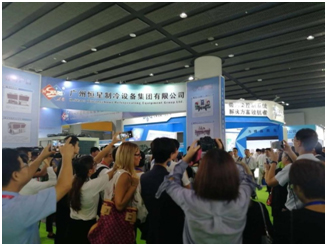

Brine chiller company


评论

此博客中的热门博文

Avoid Downtime, Cut Costs: Smart Maintenance for Smarter Chillers

  Screw water-cooled chillers   typically operate around 3,000 hours per year, depending on China's climate and geographical conditions. Regular and scientific maintenance is crucial to ensure long-term, reliable operation, extend the lifespan, and reduce operating costs. Maintenance and Upkeep Preventive maintenance during operation and inspection involves creating annual and monthly maintenance plans based on actual operating conditions. Shutdown Procedures In winter, clean and dry the unit. Open the drain valve to empty the  shell-and-tube heat exchanger  to avoid freezing. The shutdown sequence is: chiller off - cooling tower fan off - cooling water pump off - chilled water pump off. Special attention to anti-freezing: 1. Drain the evaporator and condenser if the unit is outdoors below 0°C during standby. 2. Interlock the water flow switch with the unit to prevent freezing when the chilled water flow switch malfunctions. 3. Ensure water in the evaporator is flowi...

What are the differences between air-cooled chillers and water-cooled chillers | Oumalchiller.com

  We all know that according to different heat dissipation methods, chillers can be divided into air-cooled chillers and water-cooled chillers. What is the difference between air-cooled chillers and water-cooled chillers? ​ 1. The  air-cooled chiller  uses copper tubes and aluminum fins to dissipate heat from the condenser. A fan is required to blow the outdoor air through the heat exchange fins and take away the heat of the condenser, so the air-cooled chiller does not need to be connected to the cooling tower. But compared with water-cooled chillers, under the same power, air-cooled chillers have larger equipment size and higher noise. The condenser of water-cooled chillers exchanges heat with the cooling water from the cooling tower through the heat exchanger. The excess waste heat will be transported to the cooling tower through the cooling water loop and released into the atmosphere, or enter the water-water heat exchanger or soil heat exchange coil for storage. Ther...

What is difference between centrifugal chiller and screw chillers?

 Water Chillers are generally divided into the following categories: screw chillers, centrifugal chillers, water ring heat pump units, plate and tube evaporative condensing screw chillers, thermal storage air conditioners, etc. Screw chiller and centrifugal chiller are equipment that we often encounter. Below,  Oumal Refrigeration  will take you to understand the difference between centrifugal chiller and screw chiller? What is a  screw chiller ? The compressor adopts a screw type, hence the name screw chiller. The refrigerant coming out of the evaporator of the unit is a gas; after adiabatic compression by the compressor, it becomes a high-temperature and high-pressure state. The compressed gas refrigerant is isobarically cooled and condensed in the condenser. After condensation, it changes into liquid refrigerant, and then expands to low pressure through the throttle valve and becomes a gas-liquid mixture. The liquid refrigerant under low temperature and low pressu...