跳至主要内容

Application of water chiller in concrete mixing | Industrial condenser manufacturers

 In 2004, the Ministry of Construction issued a document that chilled water must be used in the concrete mixer projects such as subways, bridges, and dams. The chilled water varies according to the outdoor temperature across the country, and the general temperature is 2℃-7℃ .
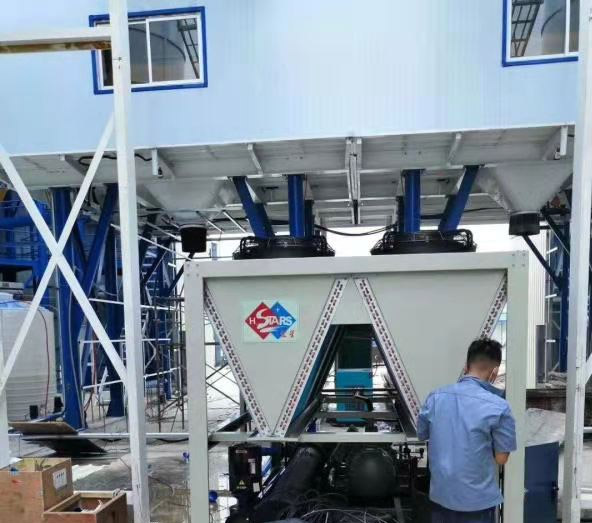

Concrete water chiller Installation site


H.Stars Group has not been involved in this market before, and customers know little about chillers, so ordinary customers buy ice cubes and ordinary tap water to solve the problem according to production needs. According to relevant statistics, this market is worth more than 3 million dollars per year. At present, only a few concrete chiller plant pays attention to this market. Since the chilled water temperature in this market is 2℃-7℃, the chillers are generally ammonia machines. Competing with other chiller manufacturers in this market, H.Stars Group concrete water chiller can directly supply 2°C water with advantages in terms of technology, equipment, solutions, and services. As long as this market and vigorously promotion to change the traditional concept of customers, H.Stars Group will surely achieve excellent performance in concrete projects such as subways, bridges, and dams.


H.Stars Group Headquarter


H.Stars Group Headquarter


H.Stars concrete chiller is designed for concrete mixer plants industry.
Because water chiller for concrete plant cooling is a technique that reduces the temperature of poured concrete to a certain level, in order to guarantee the quality of the concrete. Concrete cooling is mainly used for projects in parts of the world with warm climates, where large amounts of concrete are used. If it cures at temperatures above this level the concrete loses strength, more cracking occurs, it rapidly sets and there is an increased water demand. Therefore, the importance of concrete cooling is huge, especially considering the crucial role concrete plays in almost every building process.
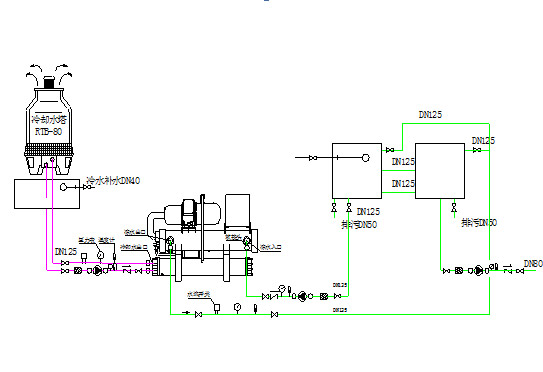
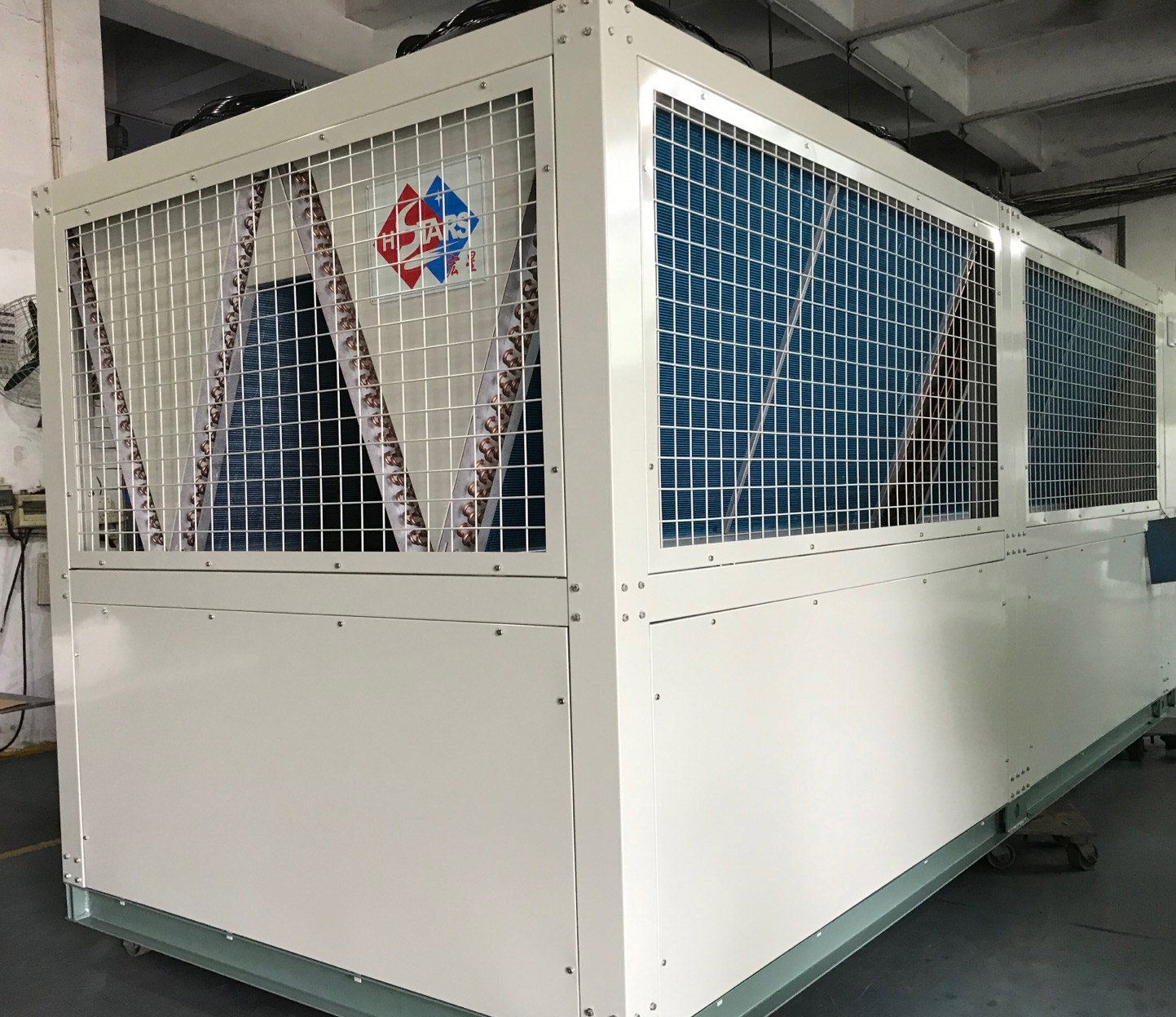
Concrete Chiller designAir cooled chiller for concrete mixer


Description:
In this scheme, the concrete mixing plant has lots of dust, so there is a buit cooling pond for easy cleaning.Two water tanks must be installed to ensure the outlet temperature at 2℃.

Three advantages of the H.Stars water chiller for concrete batch plant for cement mixer industry:
1.Energy saving-power saving, less power consumption
Example: when water consumption is 16000KG/H, the cost of ice cubes per hour is  100 dollars, and the hourly electricity cost of using the chiller system is 20 dollars,  which is a saving of 80 dollars. 24 hours a day can save 1920 dollars.
2.Fast cooling and high efficiency
The chiller directly produces 2℃ water. Use high-efficiency heat exchangers (heat  exchangers use double-sided threaded high-efficiency heat exchange tubes to force  exchange heat ).
3.Smart operation, simple and convenient

Siemens PLC control to intelligently control the temperature of the outlet  water without manual temperature adjustment.
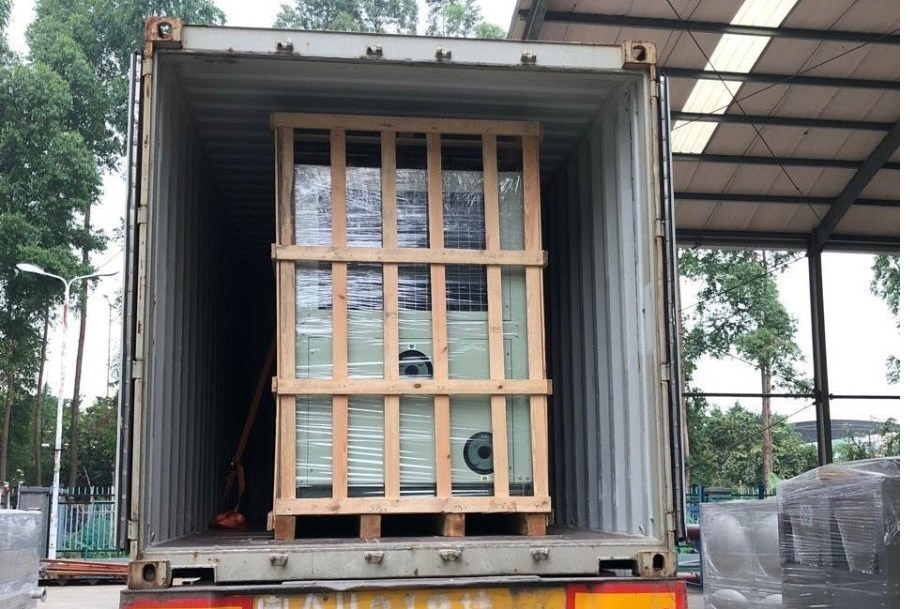

Concrete Chiller for delivery


Concrete Chiller for delivery
For more details, welcome to contact us at email maychow@hstars.com.cn


评论

此博客中的热门博文

Avoid Downtime, Cut Costs: Smart Maintenance for Smarter Chillers

  Screw water-cooled chillers   typically operate around 3,000 hours per year, depending on China's climate and geographical conditions. Regular and scientific maintenance is crucial to ensure long-term, reliable operation, extend the lifespan, and reduce operating costs. Maintenance and Upkeep Preventive maintenance during operation and inspection involves creating annual and monthly maintenance plans based on actual operating conditions. Shutdown Procedures In winter, clean and dry the unit. Open the drain valve to empty the  shell-and-tube heat exchanger  to avoid freezing. The shutdown sequence is: chiller off - cooling tower fan off - cooling water pump off - chilled water pump off. Special attention to anti-freezing: 1. Drain the evaporator and condenser if the unit is outdoors below 0°C during standby. 2. Interlock the water flow switch with the unit to prevent freezing when the chilled water flow switch malfunctions. 3. Ensure water in the evaporator is flowi...

What are the differences between air-cooled chillers and water-cooled chillers | Oumalchiller.com

  We all know that according to different heat dissipation methods, chillers can be divided into air-cooled chillers and water-cooled chillers. What is the difference between air-cooled chillers and water-cooled chillers? ​ 1. The  air-cooled chiller  uses copper tubes and aluminum fins to dissipate heat from the condenser. A fan is required to blow the outdoor air through the heat exchange fins and take away the heat of the condenser, so the air-cooled chiller does not need to be connected to the cooling tower. But compared with water-cooled chillers, under the same power, air-cooled chillers have larger equipment size and higher noise. The condenser of water-cooled chillers exchanges heat with the cooling water from the cooling tower through the heat exchanger. The excess waste heat will be transported to the cooling tower through the cooling water loop and released into the atmosphere, or enter the water-water heat exchanger or soil heat exchange coil for storage. Ther...

What is difference between centrifugal chiller and screw chillers?

 Water Chillers are generally divided into the following categories: screw chillers, centrifugal chillers, water ring heat pump units, plate and tube evaporative condensing screw chillers, thermal storage air conditioners, etc. Screw chiller and centrifugal chiller are equipment that we often encounter. Below,  Oumal Refrigeration  will take you to understand the difference between centrifugal chiller and screw chiller? What is a  screw chiller ? The compressor adopts a screw type, hence the name screw chiller. The refrigerant coming out of the evaporator of the unit is a gas; after adiabatic compression by the compressor, it becomes a high-temperature and high-pressure state. The compressed gas refrigerant is isobarically cooled and condensed in the condenser. After condensation, it changes into liquid refrigerant, and then expands to low pressure through the throttle valve and becomes a gas-liquid mixture. The liquid refrigerant under low temperature and low pressu...