跳至主要内容

H.Stars ±0.1℃ high-precision chiller for Laboratory of the university

Project Background

The Synchrotron Radiation Laboratory of the University of Science and Technology of China has built China's first dedicated synchrotron radiation source mainly based on vacuum ultraviolet and soft X-rays. To ensure the reliability and stability of the light source, it is necessary to provide stable constant-temperature cooling water in the device. The temperature should be controlled within the range of 42±0.1℃, and the temperature of the constant temperature cooling water of other components which touched water should be controlled within the range of 20-25±1℃.
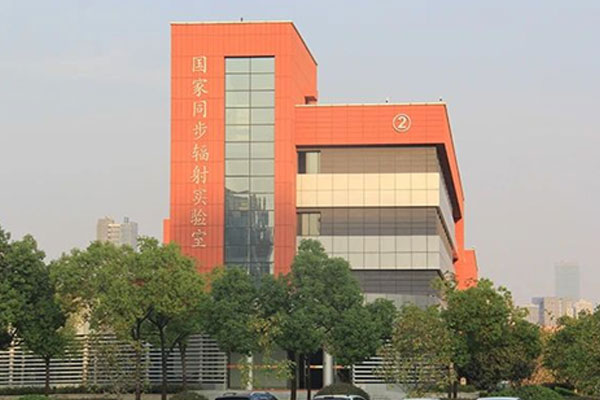

laboratory chiller


First cooperation
In January 2018, H.Stars immediately formed a professional technical team after receiving the demand for this project, and conducted discussion and research according to the technical requirements of the National Synchrotron Radiation Laboratory. After 40 days, we finally developed and produced a ±0.1℃ high-precision chiller that meets the technical requirements of the National Synchrotron Radiation Laboratory. 
So, we also called high-precision chiller as lab chiller or laboratory chiller
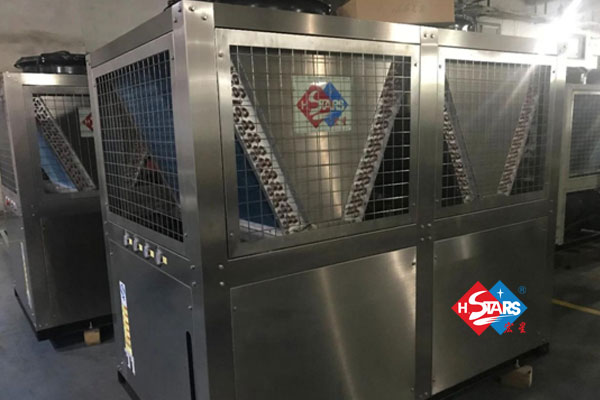

high-precision chiller


Repeated cooperation

After this, the Synchrotron Radiation Laboratory of the University of Science and Technology of China cooperated with H.Stars several times in December 2018 and August 2019, respectively, and purchased 4 high-precision chiller including: high-precision air-cooled scroll chillers and one high-precision air-cooled unit . This laid the foundation for H.Stars in the national laboratory.
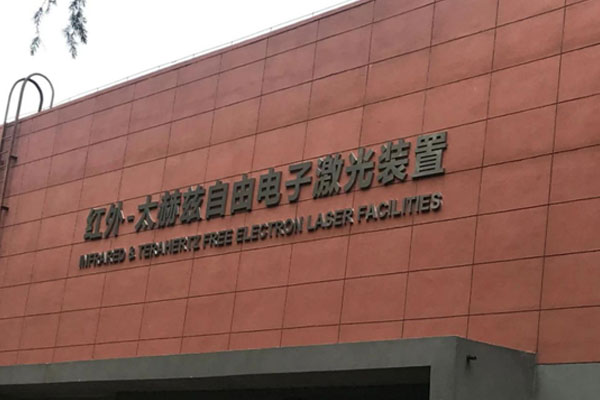

lab chiller


Good Reputation
Now, the ±0.1°C high-precision chiller developed and produced by H.Stars fully complies with the technical requirements of the National Synchrotron Radiation Laboratory of the University of Science and Technology of China, ensuring the smooth progress of the experiment. Compared with imported equipment, not only the price is much cheaper than imported equipment, but also the service is more timely and more guaranteed. At the same time, it has also won unanimous praise from the teachers of the Synchrotron Radiation Laboratory of the University of Science and Technology of China.
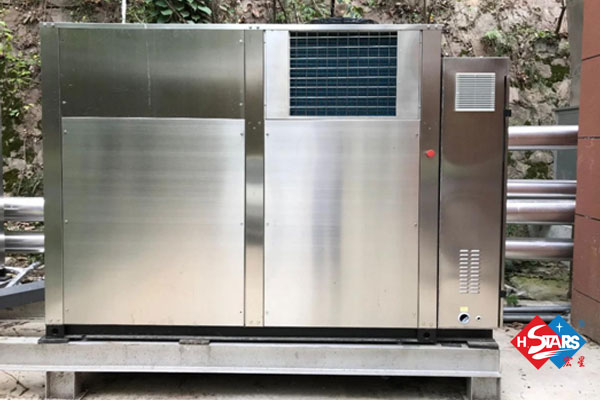

high-precision chiller use


Introduction of H.Stars
For 28 years,  H.Starshas been insisting on being engaged in the overall solution of industrial refrigeration system, insisting on creating the greatest value for customers as its duty, has accumulated rich experience and technology, and continuously innovates, successfully independently developed the "Internet of things" in the application of industrial refrigeration system. You can master the system operation status anytime, anywhere, can provide pre-alarm function, reduce personnel costs and be able to find equipment problems in time, reduce equipment damage and impact on production. H.Stars will bring more high-tech products like:  High Precision Recirculating Chillers, high-precision chiller, High Precision Recirculating Chillers, High precision UV laser water chillers 

For more information , please contact us! Email : maychow@hstars.com.cn

评论

此博客中的热门博文

Avoid Downtime, Cut Costs: Smart Maintenance for Smarter Chillers

  Screw water-cooled chillers   typically operate around 3,000 hours per year, depending on China's climate and geographical conditions. Regular and scientific maintenance is crucial to ensure long-term, reliable operation, extend the lifespan, and reduce operating costs. Maintenance and Upkeep Preventive maintenance during operation and inspection involves creating annual and monthly maintenance plans based on actual operating conditions. Shutdown Procedures In winter, clean and dry the unit. Open the drain valve to empty the  shell-and-tube heat exchanger  to avoid freezing. The shutdown sequence is: chiller off - cooling tower fan off - cooling water pump off - chilled water pump off. Special attention to anti-freezing: 1. Drain the evaporator and condenser if the unit is outdoors below 0°C during standby. 2. Interlock the water flow switch with the unit to prevent freezing when the chilled water flow switch malfunctions. 3. Ensure water in the evaporator is flowi...

What are the differences between air-cooled chillers and water-cooled chillers | Oumalchiller.com

  We all know that according to different heat dissipation methods, chillers can be divided into air-cooled chillers and water-cooled chillers. What is the difference between air-cooled chillers and water-cooled chillers? ​ 1. The  air-cooled chiller  uses copper tubes and aluminum fins to dissipate heat from the condenser. A fan is required to blow the outdoor air through the heat exchange fins and take away the heat of the condenser, so the air-cooled chiller does not need to be connected to the cooling tower. But compared with water-cooled chillers, under the same power, air-cooled chillers have larger equipment size and higher noise. The condenser of water-cooled chillers exchanges heat with the cooling water from the cooling tower through the heat exchanger. The excess waste heat will be transported to the cooling tower through the cooling water loop and released into the atmosphere, or enter the water-water heat exchanger or soil heat exchange coil for storage. Ther...

What is difference between centrifugal chiller and screw chillers?

 Water Chillers are generally divided into the following categories: screw chillers, centrifugal chillers, water ring heat pump units, plate and tube evaporative condensing screw chillers, thermal storage air conditioners, etc. Screw chiller and centrifugal chiller are equipment that we often encounter. Below,  Oumal Refrigeration  will take you to understand the difference between centrifugal chiller and screw chiller? What is a  screw chiller ? The compressor adopts a screw type, hence the name screw chiller. The refrigerant coming out of the evaporator of the unit is a gas; after adiabatic compression by the compressor, it becomes a high-temperature and high-pressure state. The compressed gas refrigerant is isobarically cooled and condensed in the condenser. After condensation, it changes into liquid refrigerant, and then expands to low pressure through the throttle valve and becomes a gas-liquid mixture. The liquid refrigerant under low temperature and low pressu...